Define an additional case-information question or value that staff can record consistently across cases.
## At a glance
- **Identify it by:** **Name**.
- **Why care:** Use the agency’s approved terminology and access policy. Preserve dates, responsible personnel, case links, and audit history because these records may support official reporting or custody review.
## Before you begin
You need the Brisk permission for the action you are taking on case info definitions. If a Create, Edit, or Delete control is absent, do not work around it with another user’s account; ask an administrator to review your role.
Create a Case Info Definition
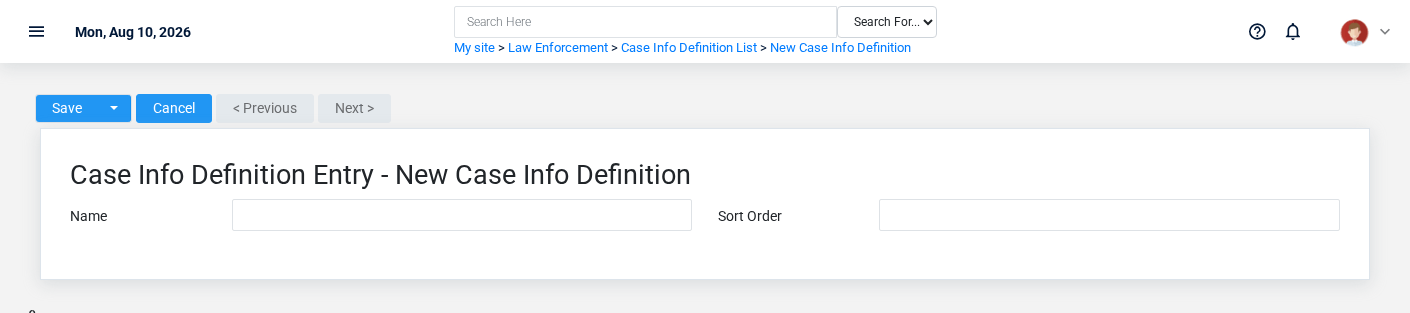
The Case Info Definitions create screen in the Brisk documentation demo.
Create a Case Info Definition only when the existing choices do not represent the policy or classification you need. Near-duplicate setup values split reporting and make later selection harder.
1. Select the business context first.
2. Enter the required identifying and operational values: **Name**.
3. Review **Sort Order** against the source document or approved setup decision.
4. Save the Case Info Definition, then confirm **Name** on its detail page before continuing.
After saving: Open **Case Info** and confirm the Case Info Definition appears with the intended label and availability. Keep the old value for historical records when changing it would split or relabel prior reporting.
Delete a Case Info Definition
Delete this Case Info Definition only if it is an unused duplicate or setup mistake. Once other records refer to it, preserve that history and make the value inactive when the screen provides that option.
Before confirming, check for related **Case Info**. Brisk may refuse deletion when another record depends on this one; resolve the duplicate or use the supported correction workflow instead of breaking the trail.
On the confirmation page, verify **Name**. After confirmation, return to the Case Info Definitions list and make sure only the intended Case Info Definition was removed.
Review Case Info Definition details
Use the detail page as the shared record of what this Case Info Definition currently means. Verify **Name**, and **Sort Order** before relying on it for a decision.
Compare the Case Info Definition with its source document or approved setup request before deciding that it needs correction.
Next check: Open **Case Info** and confirm the Case Info Definition appears with the intended label and availability. Keep the old value for historical records when changing it would split or relabel prior reporting.
Edit an existing Case Info Definition
Edit this Case Info Definition when the underlying policy or classification changed. First determine whether historical transactions should retain the old value; if so, deactivate the old choice and create a new one.
1. Open the detail page. Compare **Name** with the supporting document or approved request.
2. Recheck the identifying information shown on the screen. These values are most likely to change case history, custody, dispatch, official reporting, or audit review.
3. Save the change, return to the list, and confirm that the Case Info Definition now appears under the expected **Name**.
After the change: Open **Case Info** and confirm the Case Info Definition appears with the intended label and availability. Keep the old value for historical records when changing it would split or relabel prior reporting.
Find and review case info definitions
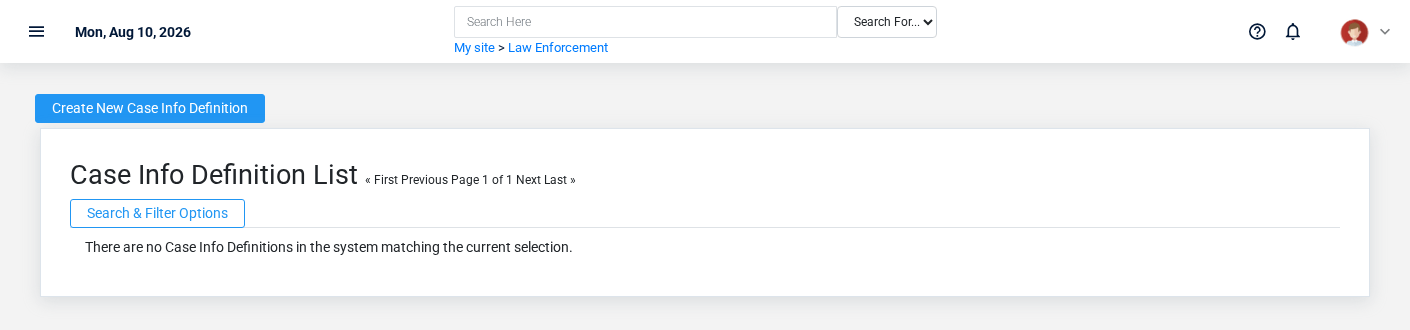
The Case Info Definitions list screen in the Brisk documentation demo.
Use the Case Info Definitions list to find the correct record before opening or changing it. Compare **Name**. Compare the full identifier rather than relying on a similar name.
Open the Case Info Definition whose **Name** match the task. If it is missing, clear the list filters and recheck the identifying information shown on the screen rather than creating a replacement immediately.
## Fields and business rules
Brisk stores 2 user-relevant fields for this Case Info Definition, including 0 linked-record selections and 0 controlled-choice fields. Create and edit screens may hide calculated or workflow-managed values from this full reference.
| Field | Required | What it controls |
|---|---:|---|
| **Name** | Yes | Sets the name of the field on. |
| **Sort Order** | No | Sets the order that this tally appears within its category. |
## What happens next
Open **Case Info** and confirm the Case Info Definition appears with the intended label and availability. Keep the old value for historical records when changing it would split or relabel prior reporting.
## Common mistakes and troubleshooting
- **The record will not save:** Recheck **Name** and any message beside the field. A required related record may also be inactive or unavailable to your role.
- **The values look right but the result is wrong:** Compare this Case Info Definition with the source document or approved setup decision, then check the downstream screen where it is used.