
Stores
Stores
Purpose and when to use this record
BriskConfigure storesa storesstorefront’s asidentity, partdomain, offulfillment behavior, customer-facing contact information, and publication state.
At a glance
-
Identify it by: Name, and Default Tax Code.
-
Check its business context: Default Customer Class, Default Tax Code, Default Payment Terms, Default Receivable Account, and Default Fulfillment Method.
-
Why care: Store, publication, consent, payment, and fulfillment states affect what customers see and what staff must act on; check the
ecommercecorrectmodule.storeThisbeforegeneratedsaving.reference -
Why care: Availability and publication flags affect future use without erasing history. Prefer disabling an obsolete setup record when existing transactions still refer to it.
Before you begin
You need the Brisk permission for the action you are taking on stores. If a Create, Edit, or Delete control is awaitingabsent, workflowdo review.not work around it with another user’s account; ask an administrator to review your role.
Create a recordStore
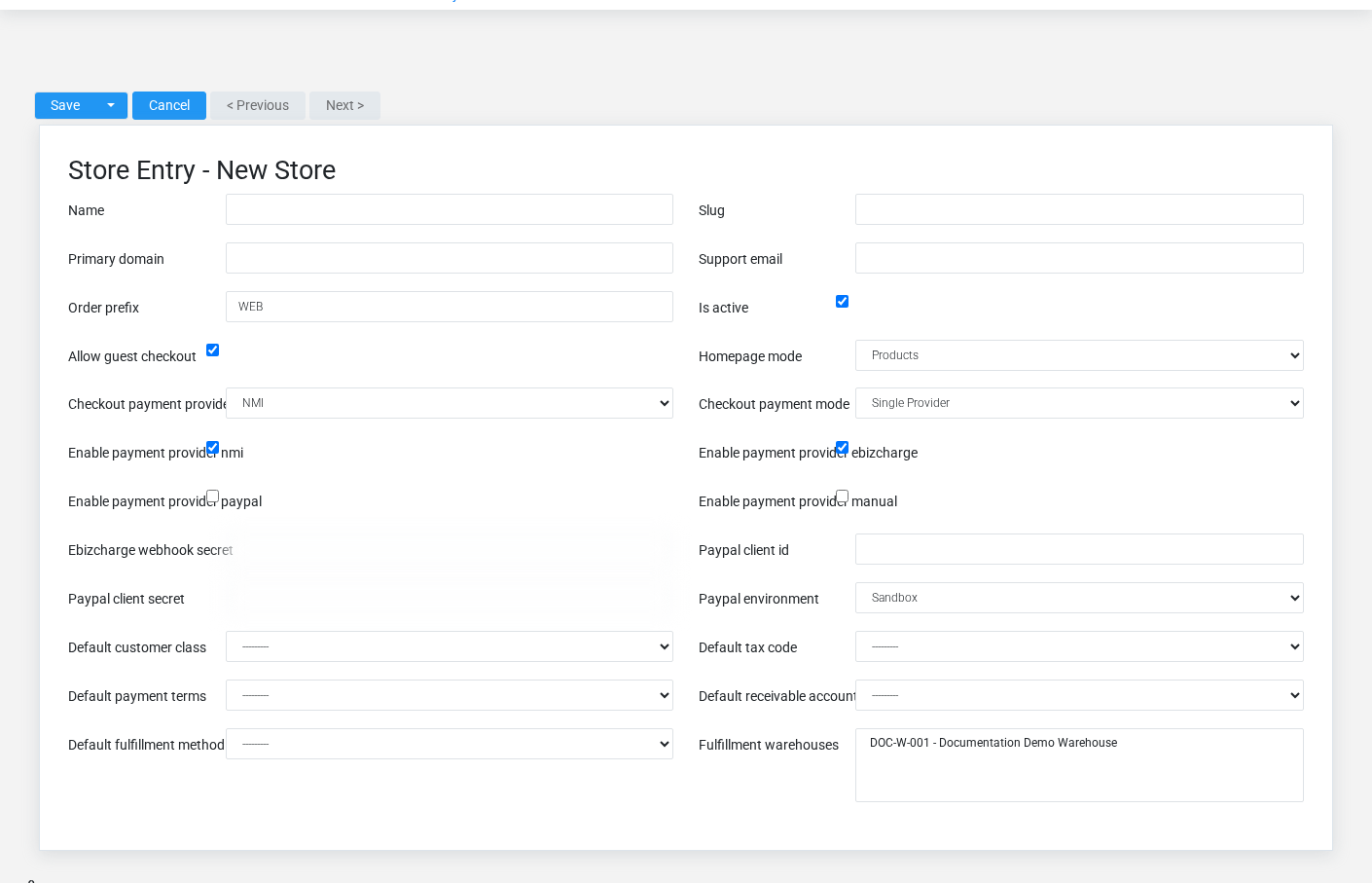
TheCreate evidencea packetStore identifiesafter searching for the viewperson, organization, item, location, or resource under alternate names and sourceidentifiers. locationMerge or correct an existing master record instead of creating a duplicate.
-
Select the business context first: Default Customer Class, Default Tax Code, Default Payment Terms, Default Receivable Account, and Default Fulfillment Method.
-
Enter the required identifying and operational values: Name.
-
Review Is Active, Allow Guest Checkout, Homepage Mode, Checkout Payment Provider, Checkout Payment Mode, and Enable Payment Provider Nmi, plus the remaining screen fields deliberately; these choices control availability or workflow rather than merely describing the record.
-
Save the Store, then confirm Name, and Default Tax Code on its detail page before continuing.
After saving: Verify this Store in Abandoned Carts, Api Credentials, Blog Posts, and Campaign Deliveries, plus the remaining screen fields before staff build new activity on it; correct ownership, classification, and active state now rather than after transactions accumulate.
Delete a Store
Delete this Store only if it is an unused duplicate or setup mistake. Once other records refer to it, preserve that history and make the value inactive when the screen provides that option.
If the record is merely obsolete, use Is Active to remove it from future use while preserving existing references.
Before confirming, check for thisrelated action.Api ConfirmCredentials, user-facingAbandoned stepsCarts, beforeBlog approvingPosts, Campaign Deliveries, and Collections, plus the remaining screen fields. Brisk may refuse deletion when another record depends on this page.one; resolve the duplicate or use the supported correction workflow instead of breaking the trail.
On the confirmation page, verify Name, and Default Tax Code. After confirmation, return to the Stores list and make sure only the intended Store was removed.
ViewReview recordStore details
The evidence packet identifiesUse the viewdetail page as the shared record of what this Store currently means. Verify Is Active, Homepage Mode, Checkout Payment Provider, Checkout Payment Mode, and sourcePaypal locationEnvironment before relying on it for a decision.
Follow Default Customer Class, Default Tax Code, Default Payment Terms, Default Receivable Account, and Default Fulfillment Method to determine whether the issue is on this action.Store Confirmor user-facingon stepsone of those linked records.
Next check: Verify this Store in Abandoned Carts, Api Credentials, Blog Posts, and Campaign Deliveries, plus the remaining screen fields before approvingstaff build new activity on it; correct ownership, classification, and active state now rather than after transactions accumulate.
Edit an existing Store
Edit this Store to keep the same real-world party, item, location, or resource accurate. Do not repurpose it for a different entity after activity is attached.
-
Open the detail page. Compare Default Customer Class, Default Tax Code, Default Payment Terms, Default Receivable Account, and Default Fulfillment Method with the supporting document or approved request.
-
Recheck Is Active, Homepage Mode, Checkout Payment Provider, Checkout Payment Mode, Paypal Environment, and Default Customer Class, plus the remaining screen fields. These values are most likely to change storefront visibility, customer communication, payment, or fulfillment.
-
Save the change, return to the list, and confirm that the Store now appears under the expected Is Active, Homepage Mode, Checkout Payment Provider, Checkout Payment Mode, and Paypal Environment.
After the change: Verify this Store in Abandoned Carts, Api Credentials, Blog Posts, and Campaign Deliveries, plus the remaining screen fields before staff build new activity on it; correct ownership, classification, and active state now rather than after transactions accumulate.
Find and review recordsstores
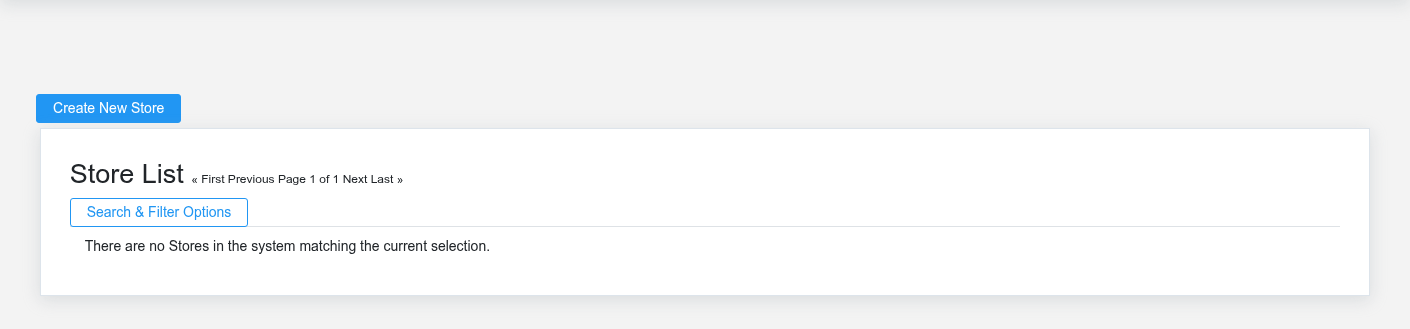
The evidence packet identifiesUse the viewStores list to find the correct record before opening or changing it. Compare Name, and sourceDefault locationTax Code. Records with similar names or numbers can still belong to different Default Customer Class, Default Tax Code, Default Payment Terms, Default Receivable Account, and Default Fulfillment Method.
- The initial order emphasizes Name. Select a column heading when you need a different comparison.
Open the Store whose Name, and Default Tax Code match the task. If it is missing, clear the list filters and recheck Is Active, Homepage Mode, Checkout Payment Provider, Checkout Payment Mode, and Paypal Environment rather than creating a replacement immediately.
Fields and business rules
Brisk stores 23 user-relevant fields for this action.Store, Confirmincluding user-facing5 stepslinked-record beforeselections approvingand 4 controlled-choice fields. Create and edit screens may hide calculated or workflow-managed values from this page.full reference.
Edit
| Field | Required | What |
|---|---|---|
| Name | Yes | Human-readable name for this |
| Slug | No | URL-safe
|
| Primary Domain | No | Public domain where customers access this storefront. |
| Support Email | No | Email address recorded as support email for this store. |
| Order Prefix | No | The order prefix recorded for this store. |
| Is Active | No | Whether this store is active. |
| Allow Guest Checkout | No | Whether this store allows guest checkout. |
| Homepage Mode | No | Controls whether the homepage highlights products, blog posts, or both. Available values: Products, Blog, Mixed. |
| Checkout Payment Provider | No | Payment provider used at checkout for this storefront. Available values: NMI, eBizCharge, PayPal, Manual/Offline. |
| Checkout Payment Mode | No | Use one checkout provider or allow customers to choose between multiple providers. Available values: Single Provider, Multiple Options. |
| Enable Payment Provider Nmi | No | Whether payment provider NMI is enabled for this store. |
| Enable Payment Provider Ebizcharge | No | Whether payment provider ebizcharge is enabled for this store. |
| Enable Payment Provider Paypal | No | Whether payment provider paypal is enabled for this store. |
| Enable Payment Provider Manual | No | Whether payment provider manual is enabled for this store. |
| Ebizcharge Webhook Secret | No | Optional shared secret expected from eBizCharge webhook requests. |
| Paypal Client Id | No | PayPal REST client ID for checkout redirects. |
| Paypal Client Secret | No | PayPal REST client secret for checkout redirects. |
| Paypal Environment | No | Choose sandbox for testing or live for production PayPal checkout. Available values: Sandbox, Live. |
| Default Customer Class | No | The default customer class associated with this store. |
| Default Tax Code | No | The default tax code associated with this store. |
| Default Payment Terms | No | The default payment terms associated with this store. |
| Default Receivable Account | No | The default receivable account associated with this store. |
| Default Fulfillment Method | No | The default fulfillment method associated with this store. |
What happens next
Verify this Store in Abandoned Carts, Api Credentials, Blog Posts, and Campaign Deliveries, plus the remaining screen fields before approvingstaff thisbuild new activity on it; correct ownership, classification, and active state now rather than after transactions accumulate.
Common mistakes and troubleshooting
-
The record will not save: Recheck Name and any message beside the field. A required related record may also be inactive or unavailable to your role.
-
The record saved but is not available where expected: Recheck Is Active, Homepage Mode, Checkout Payment Provider, Checkout Payment Mode, and Paypal Environment, then clear the filters on the destination list. A saved record can still be inactive, unpublished, locked, unapproved, or in the wrong workflow state.
-
The values look right but the result is wrong: Open Default Customer Class, Default Tax Code, Default Payment Terms, Default Receivable Account, and Default Fulfillment Method from the detail page. Correct the specific relationship that is wrong instead of forcing a total or status to compensate for it.