
Manufacturing Invoices
Manufacturing Invoices
Purpose and when to use this record
BriskReview storesthe invoice produced from manufacturing invoicesor commodity activity and its accounting handoff.
At a glance
-
Identify it by: Sale #, Date Created, Fulfillment Status, Payment Status, and Foodservice Ticket Number.
-
Check its business context: Customer, Salesperson, Warehouse, Cash Drawer, and Foodservice Table.
-
Why care: Confirm item, formula, unit, warehouse, quantity, and production state together; mistakes can distort both material consumption and finished-goods cost.
-
Why care: Treat posted, processed, paid, reversed, and edit-locked states as
partcontrols—notofordinary descriptive fields. Confirm the source transaction before changing any state that the screen permits you to change.
Before you begin
You need the Brisk permission for the action you are taking on manufacturing module.invoices. ThisIf generateda referenceCreate, Edit, or Delete control is awaitingabsent, workflowdo review.not work around it with another user’s account; ask an administrator to review your role.
Have valid Customer, Sale Ptr, and Order records ready first. Those selections determine where this Manufacturing Invoice belongs and which later screens can find it.
Find and review recordsmanufacturing invoices
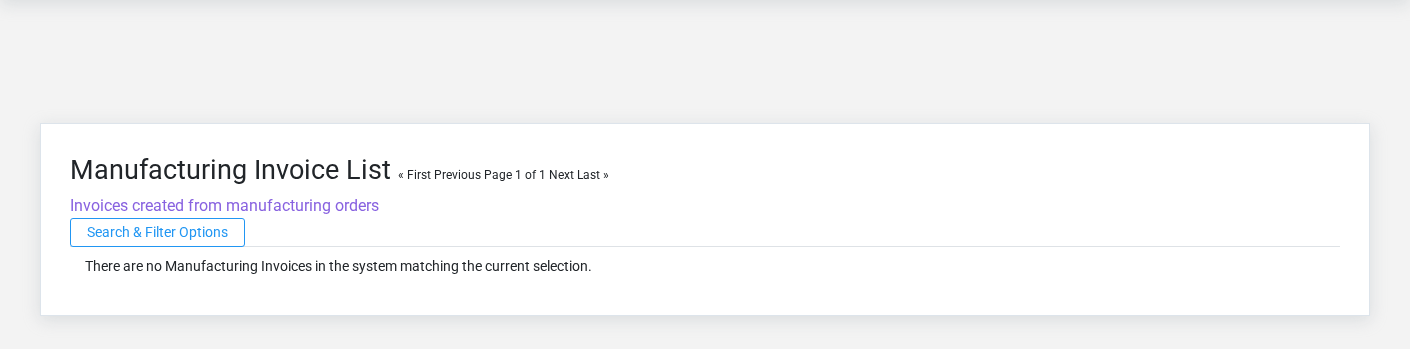
The evidence packet identifiesUse the viewManufacturing Invoices list to find the correct record before opening or changing it. Compare Sale #, Date Created, Fulfillment Status, Payment Status, and sourceFoodservice locationTicket forNumber. thisRecords action.with Confirmsimilar user-facingnames stepsor beforenumbers approvingcan thisstill page.belong to different Customer, Salesperson, Warehouse, Cash Drawer, Foodservice Table, and Foodservice Server, plus the remaining screen fields.
-
Keyword search checks Memo, Customer Po #, and Order #.
-
Narrow the list with Customer, and Order filters.
-
The date filter uses Date Created; choose a range that matches the business event you are reconciling.
Open the Manufacturing Invoice whose Sale #, Date Created, Fulfillment Status, Payment Status, and Foodservice Ticket Number match the task. If it is missing, clear the list filters and recheck Customer, Order, Date Created, Fulfillment Status, Payment Status, and Amount Paid, plus the remaining screen fields rather than creating a replacement immediately.
Edit an existing recordManufacturing Invoice
TheEdit evidencethis packetManufacturing identifiesInvoice to correct or complete the viewsame source document or operational event; use the supported reversal or follow-up workflow when the business event itself changed.
-
Open the detail page. Compare Customer, Salesperson, Warehouse, Cash Drawer, Foodservice Table, and Foodservice Server, plus the remaining screen fields with the supporting document or approved request.
-
Recheck Customer, Date Created, Warehouse, Fulfillment Status, Payment Status, and Customer Po #, plus the remaining screen fields. These values are most likely to change customer totals, tax, payment, fulfillment, and receivables.
-
Save the change, return to the list, and confirm that the Manufacturing Invoice now appears under the expected Fulfillment Status, Payment Status, Amount Paid, and Edit Locked.
After the change: Verify Fulfillment Status, Payment Status, Amount Paid, Edit Locked, Customer, and Salesperson, plus the remaining screen fields on the detail page, then continue the manufacturing workflow only when those values agree with the source locationdocument and actual work performed.
Fields and business rules
Brisk stores 30 user-relevant fields for this action.Manufacturing ConfirmInvoice, user-facingincluding steps8 linked-record selections and 2 controlled-choice fields. Create and edit screens may hide calculated or workflow-managed values from this full reference.
| Field | Required | What it controls |
|---|---|---|
| Sale # | Yes | A sale's friendly name, used to identify the transaction in receipts, reports, and searches. |
| Customer | Yes | The customer that made this purchase. |
| Date Created | Yes | The date and time that this transaction was started. |
| Salesperson | No | The salesperson assigned to this sale. |
| Warehouse | No | The physical location from which inventory items for this sale are sourced. |
| Fulfillment Status | No | Status information for pending deliveries or shipments for this sale. Available values: Draft, Submitted, Fulfilled, Contested, Complete, Cancelled. |
| Fulfillment Required | No | Marked as false for direct retail sales and service items, marked as true when shipments or deliveries are necessary. |
| Payment Status | No | Status information for pending payments and/or accounts receivable. Available values: Draft, Unbilled, Receivable, Paid, Refunded, Cancelled. |
| Memo | No | An open text field for employees to make notes about this transaction. |
| Customer Po # | No | An optional field to make note of the customer's purchase order number. |
| Non-Discount Subtotal | No | If a cash discount is applied to the ticket, this field represents the original, undiscounted subtotal. |
| Subtotal | No | The total sales price of all line items before |
| Tax Total | No | The total sales tax due for this |
| Non-Discount Total | No | If a cash discount is applied to the ticket, this field represents the original, undiscounted total. |
| Payment Terms Discount | No | Discount granted when eligible payment terms are paid immediately by cash, check, or card. |
| Total | No | The total value recorded for this sale. |
| Amount Paid | No | The amount paid value recorded for this sale. |
| Balance | No | The balance value recorded for this sale. |
| Edit Locked | No | Whether the edit locked option applies to this sale. |
| Cash Drawer | No | Links this sale to the cash drawer that it was rung up at. |
| Pos Client Request Id | No | Idempotency key supplied by the Point of Sale client for online and offline ticket submissions. |
| Foodservice Mode | No | The foodservice mode recorded for this sale. |
| Foodservice Order Type | No | The foodservice order type recorded for this sale. |
| Foodservice Ticket Number | No | The foodservice ticket number recorded for this sale. |
| Foodservice Notes | No | The foodservice notes recorded for this sale. |
| Guest Count | No | The guest count value recorded for this sale. |
| Foodservice Table | No | The foodservice table associated with this sale. |
| Foodservice Server | No | The foodservice server associated with this sale. |
| Sale Ptr | Yes | Links this Manufacturing Invoice to the selected sale; verify the relationship before saving. |
| Order | Yes | Connects this Invoice to its Order. |
What happens next
Verify Fulfillment Status, Payment Status, Amount Paid, Edit Locked, Customer, and Salesperson, plus the remaining screen fields on the detail page, then continue the manufacturing workflow only when those values agree with the source document and actual work performed.
Common mistakes and troubleshooting
-
The record will not save: Recheck Sale #, Customer, Date Created, Sale Ptr, and Order and any message beside the field. A required related record may also be inactive or unavailable to your role.
-
The record saved but is not available where expected: Recheck Fulfillment Status, Payment Status, Amount Paid, and Edit Locked, then clear the filters on the destination list. A saved record can still be inactive, unpublished, locked, unapproved, or in the wrong workflow state.
-
The values look right but the result is wrong: Open Customer, Salesperson, Warehouse, Cash Drawer, Foodservice Table, and Foodservice Server, plus the remaining screen fields from the detail page. Correct the specific relationship that is wrong instead of forcing a total or status to compensate for it.