
Receivables, Statements, and Finance Charges
Receivables, Statements, and Finance Charges
Purpose and when to use this screen
ReviewThese screens turn posted Receivable Transactions into collection analysis, customer balances, prepare statements, and assess finance chargescharges. fromUse them after sales, payments, credits, write-offs, and customer setup are complete for the dedicatedreporting accountingcutoff. screens.Resolve questionable balances before communicating them to customers or creating new charges.
Review accounts-receivable aging
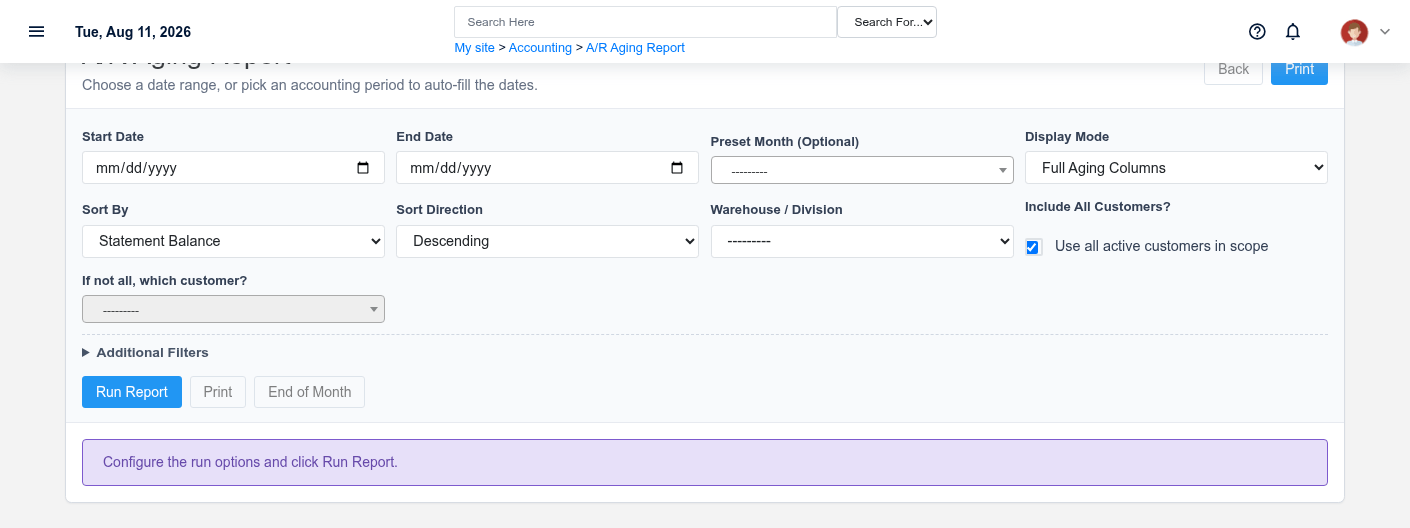
UseChoose a start/end date or a closed-month preset, then set display mode, sort, warehouse/division, and customer scope. Decide whether to include zero balances, credit balances, only overdue buckets, written-off customers, and customer numbers. Run the report and read Statement Balance, Current, 30, 60, 90, 90+, Overdue Total, and credit amount together. A customer with a credit or unapplied payment can have a misleading gross aging if you focus on one bucket alone.
Sort by overdue total or oldest bucket for collections work; use customer-name/number order for reconciliation and filing. Confirm the report tocutoff findbefore overduecomparing balancesit bywith a live customer and aging period before collections or statement work.balance.
Prepare customer statements
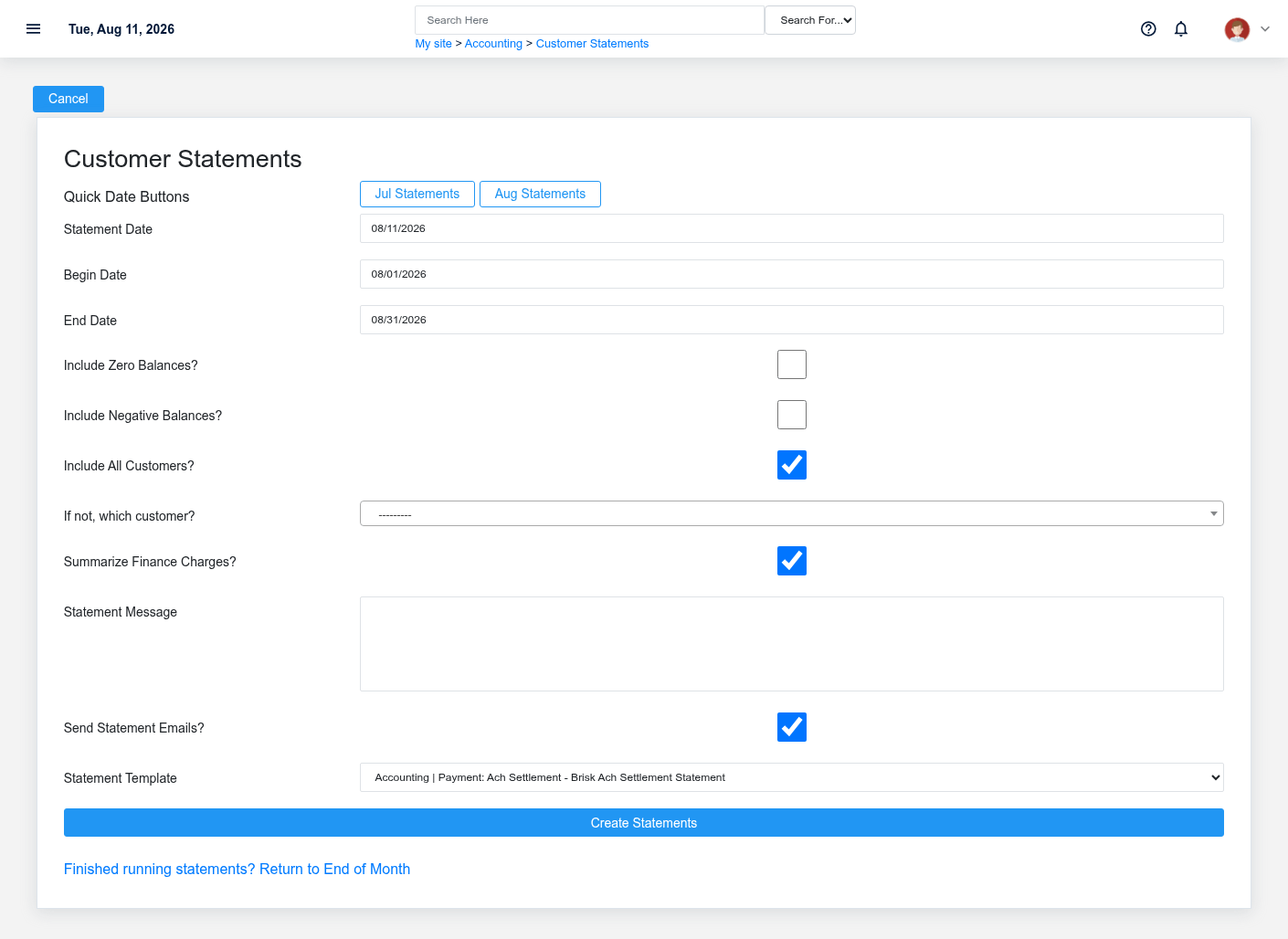
Set Statement Date, Begin Date, and End Date, or use the quick month buttons. Choose all customers or one customer and decide whether to include zero or negative balances. Select whether finance charges are summarized, enter the customer-facing statement message, choose the statement scopePDF template, and datereview options,Send reviewStatement Emails? before generating.
Preview representative statements before a batch send. Confirm opening activity, invoices, payments, credits, finance charges, ending balance, remittance details, branding, pagination, and customer email address. A statement is communication, not a posting transaction; correct the selectedsource customers,record and generateregenerate statementsit onlyrather afterthan confirmingediting the reporting period.output.
Assess finance charges
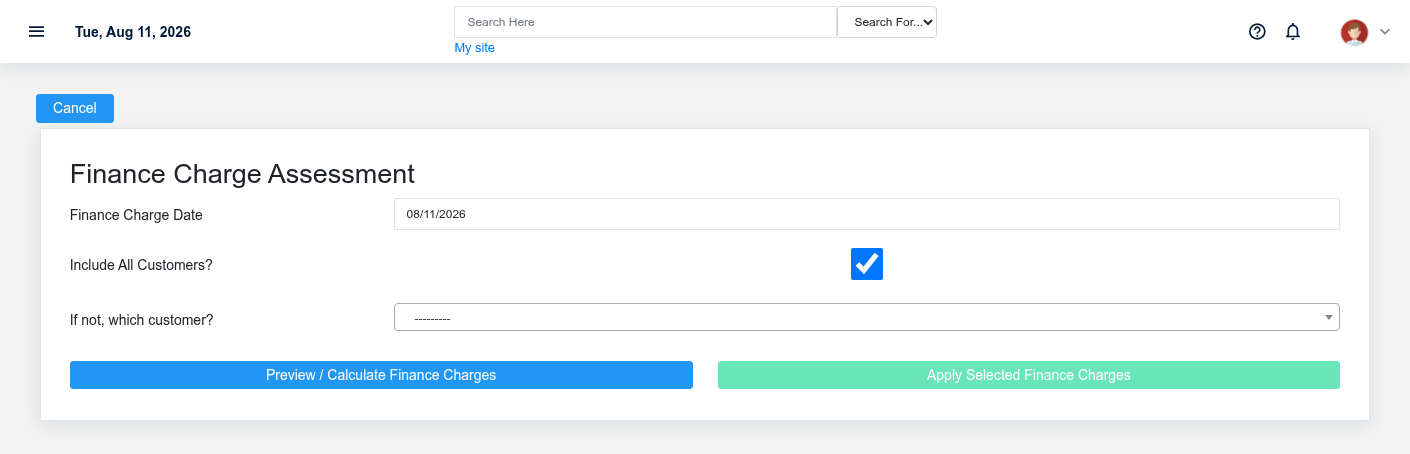
Select the finance-charge date and customer scope, then use Preview / Calculate Finance Charges. Review eligibleevery proposed customer, charge amount, original transaction source, and memo. Clear any row that should not be applied and investigate why it qualified. Apply only from the current preview; Brisk uses a preview token to protect the calculation/apply sequence.
Finance-charge eligibility comes from customer/group and payment-term policy plus the overdue balancestransaction state. Fix incorrect terms, dates, groups, payments, credits, or write-offs before applying. Afterward, review the applied list and regenerate statements if they should include the configured charge rules before creating financenew charges.
Working safely and effectively
ReportsReconcile aging totals to the receivable register, document exceptions, and statementsrestrict reflectstatement/email output to authorized recipients. Do not repeatedly apply finance charges because a page timed out; check the customer’s transactions first. Preserve the original charge and use the approved credit/adjustment process when a posted accountingfinance activity.charge Resolvemust questionablebe balances before communicating them to customers.reversed.